

This book might be for you if…
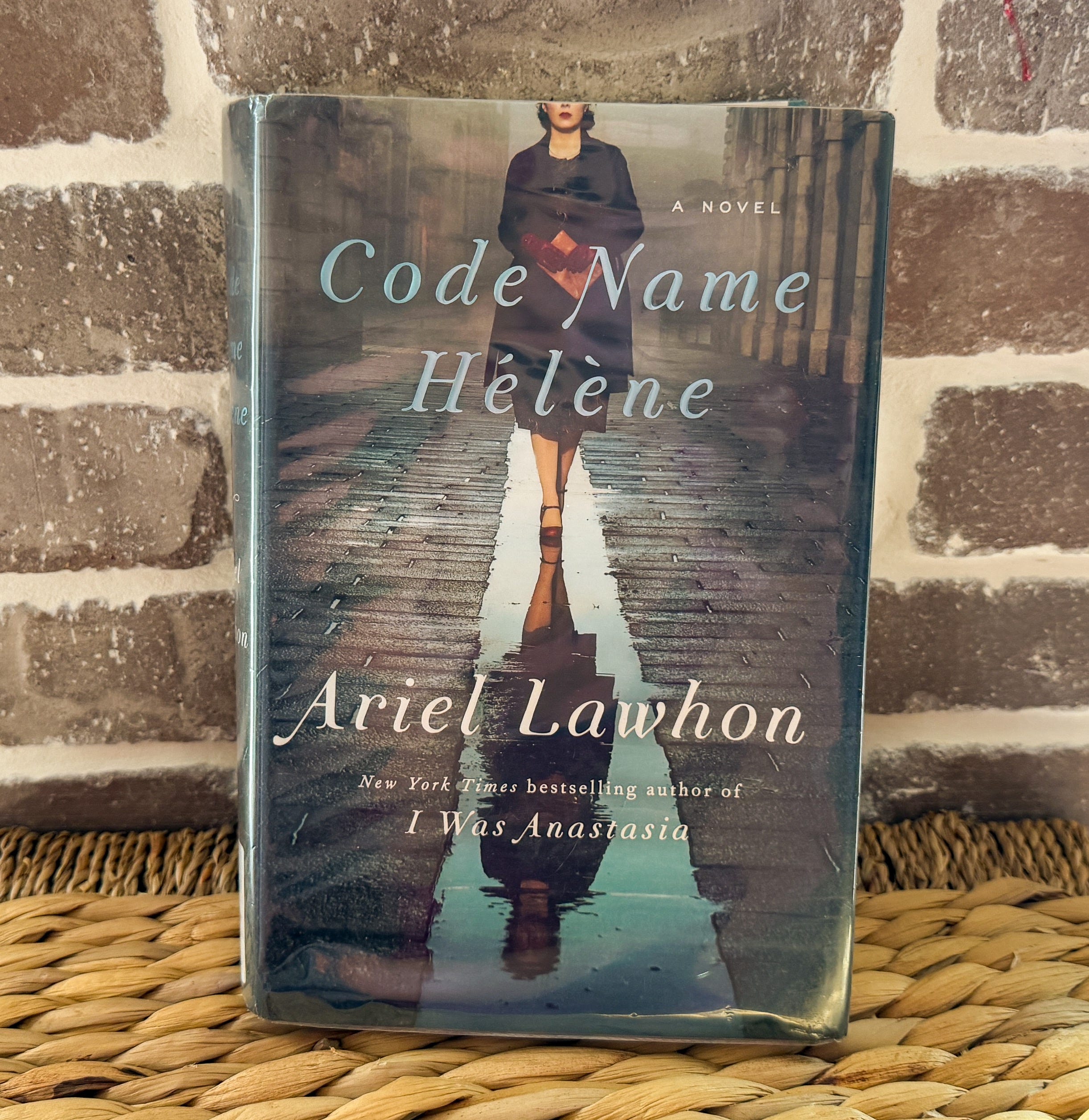
… you love books about bad-ass women, a revenge plot, and/or love stories; enjoy Kate Quinn, Kristin Harmel, Kelly Rimmer, or Georgia Hunter; enjoy dual timeline; are interested in WWII fiction; like stories that flip the traditional gender norms on their head; and/or are intrigued by the fictionalized account of real people.
The most remarkable part of this novel—aside from the incredibly deep research it must have taken to recreate this story—is that the main character, Nancy Wake (a.k.a. Lucienne Carlier, The White Mouse, Madam André, and Hélène), was a real person, and this is based on her real life. She’s strong, she’s feisty, she’s brilliant…and through it all, she remains deeply, empathetically human. She’s gritty and no bullshit, but her witty asides genuinely had me laughing out loud. Many men in that time would have been threatened by her fierce independence, but her husband celebrated it. She was tough-as-nails, but also incredibly loyal, and full of love and empathy that several times broke my heart.
The story itself is miraculous. Nancy is an Australian expat living in Paris (after having bluffed her way into a freelance journalism job) who falls fiercely in love with the wealthy Henri Fiocca at the nearly the same time she falls fiercely in hate with the Nazis, the French collaborators, and everything they all stand for.
Henri goes off to fight, but Nancy can’t sit at home—her ethics and her disposition won’t allow it. She smuggles people and documents, she bribes friends out of prison, she flees France because of a five million franc bounty on her head and trains with the Special Operations Executives in Britain, and she leads the French Resistance on the ground as one of its most powerful leaders (fighting misogyny the whole way, I might add). Through it all, she relied on her signature red lipstick to keep her grounded and connected to herself.
Throughout this story we get to experience Nancy’s romance with Henri as herself, but we also get to live through all of these exploits through her various identities. The story is wonderful—it’s a testament to love and marriage, to friendship (if you’ve read it, her friendship with Hubert, Denden, and Anselm…so beautiful), even to the love of her life—her dog, Picon, while also being a reminder of the truly horrific things human beings can do to each other, and the ways that ordinary people can step in and stand up for what’s right.
The writing is remarkably good, and I appreciate that Lawhon always includes an author’s note with more information about her heroine and her writing and research process. This is a story about love, about sacrifice, about determination, and about staying steady in the face of impossible odds.
A few favorite quotes:
“The thing about lipstick, the reason it’s so powerful, is that it is distracting. Men don’t see the flashes of anger in your eyes or your clenched fists when you wear it. They see a woman, not a warrior, and that gives me the advantage.”
“I absolutely hate having to wear flats just because a man didn’t have the good sense to grow a few inches taller.”
“Love is a choice. It is the active choosing of good for another person. But like? It is a gift and it cannot be forced.”
“I am a devoted fan of the male species. They are brave, brilliant, offer endless entertainment, are good for moving heavy objects, and make the act of procreation a great deal more enjoyable. I’d hate to see a world in which they did not exist. But sometimes they can be spectacular idiots.”
“I am the same but different, and I greet this new reflection with a nod of acceptance. There is metal in my spine and there are fractures in my soul. I resemble Garrow now. I have been changed by war.”
I do want to include one content warning, so please stop here if you prefer no spoilers. Although I found this scene upsetting, given the accurate historical context I didn’t find it at all gratuitous. But reading it did make me deeply sad, and it’s even sadder is that that these things did, in fact, happen.
Content warning: There is a graphic depiction of the death of a pregnant woman and her fetus, though the death itself does not happen on page.
Thanks for reading! If you like this content, please:
❤️ so other folks can find it, too. Leaving a comment, re-stacking, or sharing👇🏻 is even better!
📫 email or text it to a friend, and/or share on social media (please tag me!). Even sending to one person can help me grow my reach.
💵 Although my content is 100% free and I have no plans to change that, if monetary support is your jam, you’ll receive my undying gratitude for supporting my creative work by making a one-time contribution here.
🧠 This essay was written without the use of generative AI, though I do use AI for administrative and marketing tasks like identifying hashtags so I can try and have a few more of you reading my words!