

Wonder
by R.J. Palacio
Auggie Pullman is just a regular kid the summer before fifth grade…except he’s always been homeschooled because of a combination of rare genetic disorders that’s left his face severely deformed. But his mom thinks it’s time to go to school, and mom prevails.
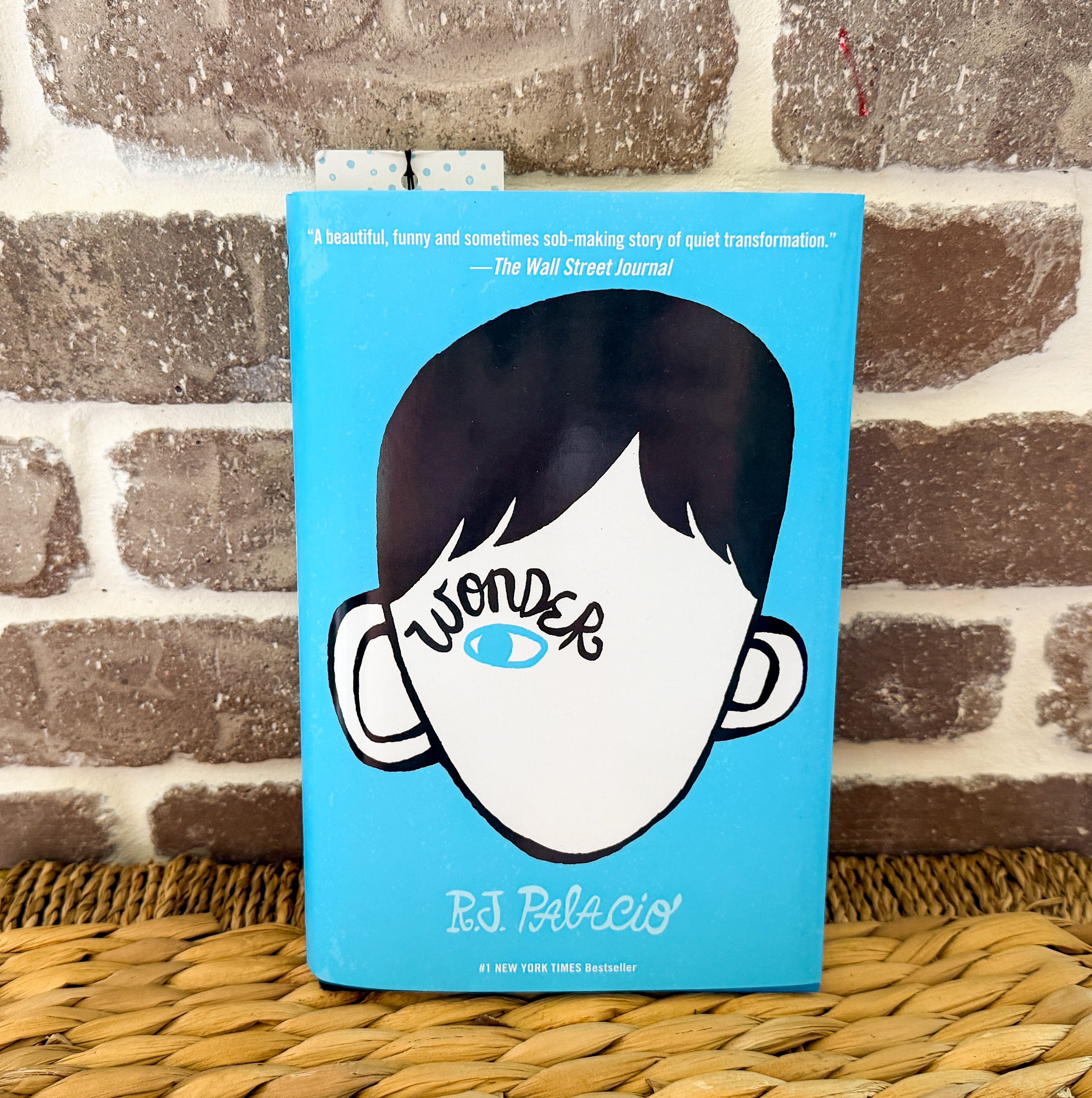
Yes, this is technically a children’s middle grade novel. Yes, you should read it even if you’re not a middle grade (8 ish - 12 ish) kid. Especially if you’re a parent of a kid in this age group, or soon will be. Even though it’s sold about a gazillion copies (over 16 million, if the internet is correct), I’d never heard of it until I put a query out to the socials looking for a book that would be a great end-of-year elementary school teacher gift. A high school friend who IS an elementary school teacher suggested it, and I’m SO glad she did.
As she told me, the themes of kindness and friendship are universal. So, too, is the point of open-mindedness and inclusion. But I think it goes deeper than that, and the purpose in reading differs for kids and adults.
My eldest is going to read this (or we’ll read together) and discuss, and we’ll for sure be talking about how you shouldn’t judge people by how you look, how many people are dealing with things you can’t see (even though with Auggie, you can), and how easy it is to be kind and inclusive…but how meaningful even a brief moment of kind connection can be for someone else.
But parent to parent, I want to emphasize that so many kids are dealing with things that don’t make them “normal” (I’m using that word for ease, but loathe it for describing kids). Or make them feel different, even if—unlike Auggie—you can’t readily see their difference (like neurodivergence, anxiety, etc.) or it’s not a thing you think they’d be aware of at their age (skin color, body shape, etc.). So many adults forget that being a kid is HARD, and that doesn’t get easier as they get older. No, they don’t have jobs or kids or mortgages, but they’re also navigating so much without the context or wisdom (or brain maturity!!!) that we do. Everything is new, hard things are amplified, and it’s important for us to keep that in mind as we parent. This book was a beautiful reminder for me that the choices we make when they’re kids—the empathy we show them, the ways we encourage them to use their voice and critical thinking skills, the messages we give them through our words and actions—are forming the foundation not just for how they interact with the world now, but how they can influence the kids around them, too.
“There’s a wonderful line in a book by J.M. Barrie…’Shall we make a new rule of life…always try to be a little kinder than is necessary?’…Kinder than is necessary…what a marvelous line, isn’t it? Kinder than is necessary. Because it’s not enough to be kind. One should be kinder than needed. Why I love that line, that concept, is that it reminds me that we carry with us, as human beings, not just the capacity to be kind, but the very choice of kindness.” — Mr. Tushman, p. 299